Done Picking Before September: Inside the 2026 Harvest
Most years, the first week of September is the busiest stretch of our calendar. Fruit
coming in, tanks filling, nobody sleeping much.
This year, by the first week of September, we were done.
2026 gave us the earliest harvest on record at Lost Draw — and one of the strangest
growing seasons any of us can remember. Here’s what happened, what it means for the
wine, and what to expect when you visit this fall.
A spring that rewrote the calendar.
It started with freezes. A run of hard spring cold snaps came through at exactly the wrong moment
in the growing season — the point where vines are pushing tender new growth and have no
defense against it.
Then came the rain. Weeks of it, heavy, right through spring.
That combination pushed the whole season forward. Everything ripened faster than we’d planned
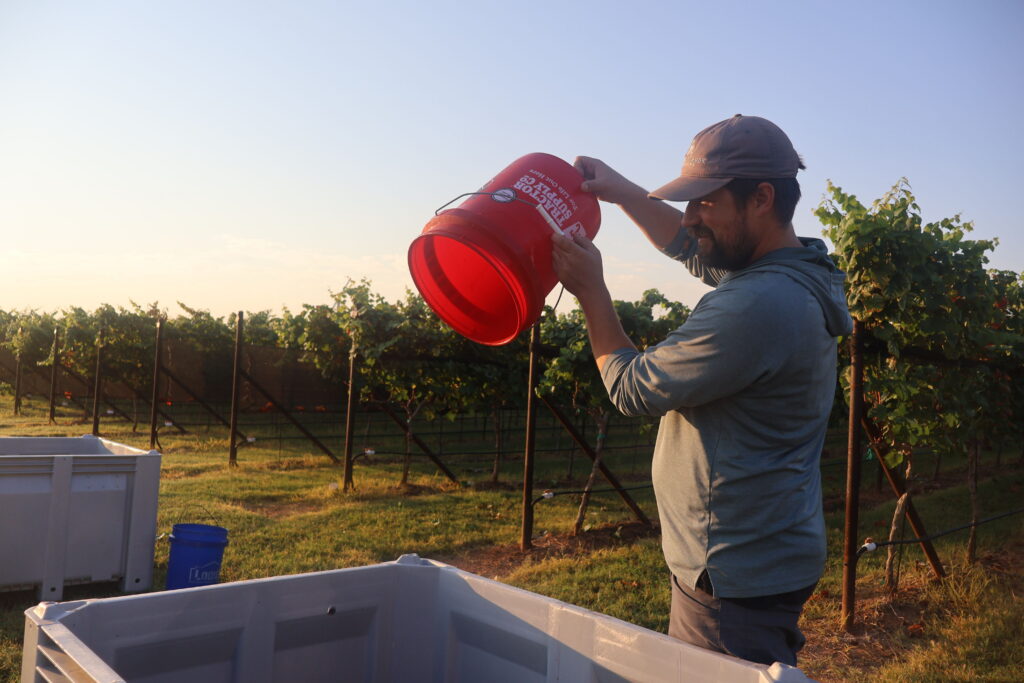
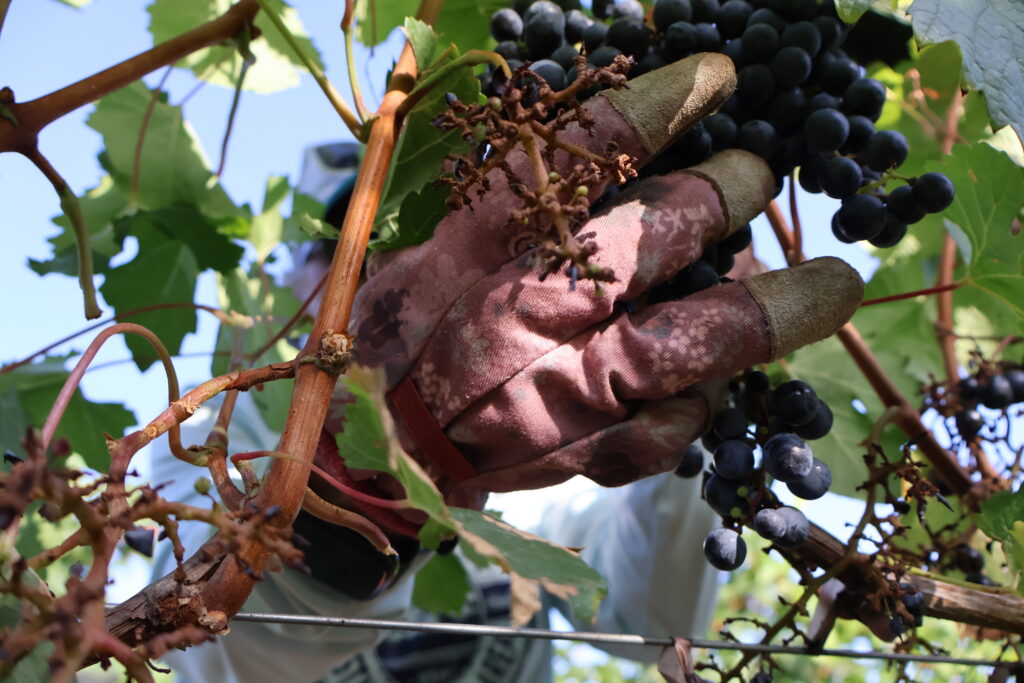
for, and once fruit is ready, it doesn’t wait for anyone’s schedule. We picked early, we picked fast,
and we were finished before September — weeks ahead of a normal year.
What the freezes did to Texas?
The freezes didn’t just move the calendar. They cost the state a lot of fruit.
Yields were down dramatically across Texas in 2026. Vineyards that expected a full crop got a
fraction of one. Some varietals were hit far harder than others — and one in particular came close
to disappearing.
There was almost no Viognier in Texas this year. Not a light crop. Close to none.
For a state where Viognier has become one of the signature white grapes, that’s a significant loss,
and it will show up on wine lists across Texas for the next couple of years.
Our vines came through it.
Here’s the part we’re quietly proud of.
In the same season that cut yields across the state, our Lost Draw Estate Vineyard produced the
best crop we’ve ever taken off it.
We’d like to claim credit for that, but a good deal of it is the ground itself, and the fact that we farm
it ourselves. “Our Vines. Our Wines.” isn’t a slogan we picked because it sounded good — it’s a
description of how this winery is set up. We’re in those rows all year. We know what each block
does in a wet spring and what it does in a dry one. In a year like 2026, that’s the difference
between having a vintage and not having one.
The whites: scarce, and two of them unfamiliar.
2026 whites will be scarce and limited in quantity. There’s no way around that, and we’d rather say
it plainly now than surprise anyone later.
With Viognier essentially unavailable, we went outside our normal programs and got creative. We
sourced Roussanne — a Rhône white we know well and have a lot of time for. And we brought in
the first Sauvignon Blanc in Lost Draw history.
Neither was the plan in January. Both are the kind of decision a difficult vintage forces on you, and
both are the reason we’ll look back on 2026 as an interesting year rather than just a hard one.
The reds: less wine, bigger wine.
Reds were down in yield too. But quality is high, and the wines are showing real concentration —
smaller crops often do that. Less fruit per vine tends to mean more intensity in what’s there.
Expect generally bigger, denser reds from 2026, with great aging potential. These are wines to put
away, not wines to rush.
And a second first: we brought in our first ever Touriga Nacional, the backbone grape of the Douro
and a variety that has every reason to do well in Texas heat. Two firsts in one vintage wasn’t the
plan. We’ll take it.
What to drink this October:
The 2026 wines are in tank and barrel, doing what they need to do. They’ll take the time they take.
Which makes October a good month to come drink the vintage before it. Texas Wine Month runs
the length of the month, and the cellar door in Johnson City is open Wednesday through Sunday
— guided tastings, poured at the source, led by wine ambassadors who can tell you which block
each glass came off.
If you want first access when the 2026 whites are eventually released — and given how little there
will be, first access is going to matter — the Cellar Club is where that happens.
One more thing: Every vintage has a personality, and it usually comes from whatever went wrong. 2026’s
personality is early, small, and concentrated, with two grapes we’d never worked with before.
Come taste where it grew. We’ll tell you the rest in person.
— Brad Buckelew, Winemaker